

Valentine’s Day in Japan Followed by White Day in Japan: How It Works
Valentine’s Day is celebrated all over the world, but Valentine’s Day in Japan is truly unique. Unlike Western countries where couples exchange gifts mutually on February 14, Japan follows a two-step celebration: Valentine’s Day on February 14 and White Day on March 14.
This beautiful tradition reflects Japanese culture, social etiquette, and emotional expression in a way that fascinates people globally. In this article, we’ll explore how Valentine’s Day in Japan works, the different types of chocolates, the role of White Day in Japan, and how language and culture are deeply connected to these celebrations.
Understanding Valentine’s Day in Japan
How Valentine’s Day Is Celebrated in Japan
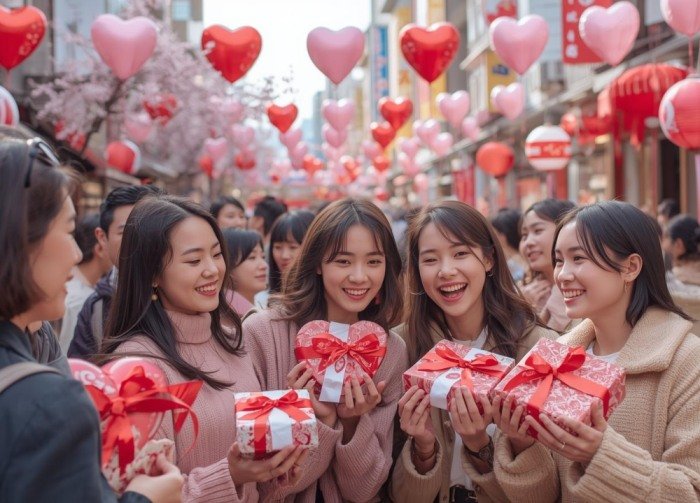
Valentine’s Day in Japan is primarily a day when women give chocolates to men. This custom began in the 1950s, largely influenced by Japanese chocolate companies that marketed Valentine’s Day as a chocolate-giving event.
Unlike Western Valentine’s Day, where men and women exchange gifts, cards, flowers, and dinners, in Japan:
- Women give chocolates
- Men receive chocolates
- Romantic feelings are often expressed indirectly
- Chocolates carry specific meanings
To understand the cultural background in more depth, you can read this detailed guide on Valentine’s Day in Japan.
Types of Chocolates on Valentine’s Day in Japan
One of the most fascinating aspects of Valentine’s Day in Japan is that not all chocolates mean the same thing. The type of chocolate you give defines your relationship with the person.
1. Honmei Choco (本命チョコ) – True Love Chocolate
Honmei choco is given to:
- Boyfriends
- Husbands
- Romantic interests or crushes
These chocolates are usually:
- High quality
- Handmade
- Expensive
- Beautifully packaged
Giving honmei choco is a serious emotional gesture and often involves careful planning.
2. Giri Choco (義理チョコ) – Obligation Chocolate
Giri choco is given to:
- Male coworkers
- Bosses
- Classmates
- Friends
This type of chocolate is:
- Affordable
- Store-bought
- Given out of social courtesy rather than love
Giri choco highlights Japan’s strong workplace culture and emphasis on harmony.
3. Tomo Choco (友チョコ) – Friendship Chocolate
Tomo choco is exchanged between friends, especially among:
- Female friends
- Schoolmates
- Close social circles
It represents friendship rather than romance and is becoming increasingly popular.
4. Jibun Choco (自分チョコ) – Self Chocolate
A modern trend in Valentine’s Day in Japan, jibun choco is chocolate that women buy for themselves as a form of self-love and celebration.
Why Only Women Give Chocolates on Valentine’s Day in Japan
This tradition is rooted in:
- Post-war marketing strategies
- Cultural norms of indirect emotional expression
- Japan’s emphasis on modesty and etiquette
Men are not expected to respond immediately. Instead, they respond a month later on White Day in Japan, making Valentine’s Day a two-part celebration rather than a single event.
What Is White Day in Japan?
The Meaning of White Day
White Day in Japan, celebrated on March 14, is when men return the favor by giving gifts to women who gave them chocolates on Valentine’s Day.
White Day was introduced in 1978 by the Japanese confectionery industry and has since become an essential part of Japanese Valentine culture.
White Day Gift Traditions in Japan
On White Day in Japan, men give:
- White chocolate
- Cookies
- Marshmallows
- Jewelry
- Accessories
- Luxury items (for romantic partners)
Traditionally, there was an unspoken rule called “sanbai gaeshi”, meaning the return gift should be two to three times the value of the Valentine’s chocolate.
Meaning Behind White Day Gifts
Just like Valentine’s chocolates, White Day gifts also carry hidden meanings:
- Cookies – “Let’s stay friends”
- White chocolate – “I value you”
- Marshmallows – “I’m not interested”
- Jewelry or expensive gifts – “I love you”
Understanding these meanings is important, especially for foreigners living or dating in Japan.
Valentine’s Day and White Day: A Cultural Balance
Together, Valentine’s Day in Japan and White Day in Japan represent:
- Emotional balance
- Respectful communication
- Social harmony
- Thoughtful gift-giving
Instead of immediate emotional expression, Japan values time, reflection, and reciprocation.
How Language Connects with Valentine’s Day in Japan
Language plays a huge role in Japanese culture. Many people prefer expressing feelings through:
- Written messages
- Simple phrases
- Carefully chosen words
If you’re interested in learning how to express Valentine wishes correctly, this guide on how to write Happy Valentine’s Day in Japanese is extremely helpful.
Basic Japanese Phrases Used on Valentine’s Day
Here are a few commonly used phrases:
- ハッピーバレンタインデー
(Happī Barentain Dē) – Happy Valentine’s Day - いつもありがとう
(Itsumo arigatō) – Thank you always - これ、よかったら
(Kore, yokattara) – If you like, please have this
These phrases reflect the polite and indirect nature of Japanese communication.
Learning Japanese to Understand Cultural Events Better
To fully appreciate traditions like Valentine’s Day in Japan and White Day in Japan, learning Japanese basics is highly recommended.
Understanding JLPT N5 Level
If you’re a beginner, learning about the N5 Japanese language level will help you understand:
- Basic grammar
- Simple sentences
- Everyday vocabulary
Japanese Writing Systems and Valentine Culture
Japanese has three writing systems, all of which appear in Valentine cards, chocolates, and messages.
1. Hiragana
Hiragana is used for:
- Native Japanese words
- Simple expressions
- Polite messages
2. Katakana
Katakana is commonly used for:
- Foreign words
- “Valentine”
- “Chocolate”
For example:
- バレンタイン (Valentine)
- チョコレート (Chocolate)
3. Kanji
Kanji is used for:
- Deeper meanings
- Emotional expressions
- Traditional messages
Understanding kanji adds emotional depth to Valentine’s greetings.
Valentine’s Day in Japan for Foreigners
For foreigners, Valentine’s Day in Japan can feel confusing at first. Some common tips:
- Don’t feel pressured to give chocolates
- Understand social expectations at workplaces
- Ask politely if unsure
- Observe before participating
Japanese people appreciate effort and cultural respect more than perfection.
Modern Changes in Valentine’s Day and White Day in Japan
Today, traditions are evolving:
- Men also give chocolates
- Couples celebrate together
- Gender roles are becoming flexible
- Online gifting is increasing
Despite modernization, the core essence of Valentine’s Day in Japan and White Day in Japan remains intact.
Why Valentine’s Day and White Day Are Important in Japan
These celebrations:
- Strengthen social bonds
- Encourage thoughtful communication
- Reflect Japanese values of respect and balance
- Combine tradition with modern life
They are more than romantic holidays—they are cultural expressions.
Final Thoughts
Valentine’s Day in Japan followed by White Day in Japan is a beautifully structured tradition that emphasizes balance, respect, and emotional understanding. From honmei choco to White Day returns, every gesture carries meaning.
If you’re interested in Japanese culture, language, or planning to live or work in Japan, understanding these traditions will help you connect more deeply with people and society.
By learning the language, understanding cultural context, and respecting traditions, you can truly appreciate how love is expressed in Japan—quietly, thoughtfully, and meaningfully.
Frequently Asked Questions (FAQs)
1. Do they celebrate Valentine’s Day in Japan?
Yes, Valentine’s Day in Japan is widely celebrated on February 14, but in a unique way. Unlike Western countries, women traditionally give chocolates to men as a symbol of love, gratitude, or social obligation. The celebration is deeply rooted in Japanese culture and is closely followed by White Day in Japan, making it a two-part romantic tradition.
Learn more about the tradition here: Valentine’s Day in Japan.
2. Is February 11 a holiday in Japan?
Yes, February 11 is a national holiday in Japan known as National Foundation Day (Kenkoku Kinen no Hi). It celebrates the founding of Japan and the ascension of the first emperor. This holiday is unrelated to Valentine’s Day in Japan, which is celebrated later on February 14 and focuses on romance and gift-giving.
3. Do girls give gifts on Valentine’s Day in Japan?
Yes, giving gifts is a key part of Valentine’s Day in Japan, and traditionally, women give chocolates to men. These chocolates can represent romantic feelings (honmei choco), friendship, or workplace courtesy (giri choco). Men usually respond one month later on White Day in Japan by returning gifts.
4. What is March 14 in Japan?
March 14 is celebrated as White Day in Japan. On this day, men give return gifts to women who gave them chocolates on Valentine’s Day in Japan. Popular White Day gifts include white chocolate, cookies, and even jewelry, depending on the relationship and emotional intent.
5. What is the most romantic day in Japan?
The most romantic days in Japan are Valentine’s Day in Japan (February 14) and White Day in Japan (March 14). Together, these days represent a complete cycle of love, confession, and reciprocation. Many couples consider White Day especially romantic because it reflects a thoughtful response to Valentine’s feelings.
6. Is February 24th a holiday in Japan?
No, February 24 is not a national holiday in Japan. However, it often falls within the Valentine season, when stores still display Valentine-themed products and couples continue celebrating after Valentine’s Day in Japan.
7. Why is Valentine’s Day in Japan different from other countries?
Valentine’s Day in Japan is different because women take the lead in giving chocolates, and men respond later on White Day in Japan. This system reflects Japanese cultural values such as balance, politeness, and thoughtful communication rather than immediate emotional expression.
8. What kind of gifts do men give on White Day in Japan?
On White Day in Japan, men give gifts such as white chocolate, cookies, marshmallows, accessories, or jewelry. The value and type of gift often reflect the depth of the relationship formed on Valentine’s Day in Japan.
9. How can I say “Happy Valentine’s Day” in Japanese?
You can say “Happy Valentine’s Day” in Japanese as ハッピーバレンタインデー. Many people also include short polite messages written using Japanese scripts. To learn proper expressions and writing styles, check this guide on how to write Happy Valentine’s Day in Japanese.
10. Does learning Japanese help in understanding Valentine’s Day and White Day traditions?
Yes, learning Japanese helps you better understand cultural celebrations like Valentine’s Day in Japan and White Day in Japan. Beginners can start with the N5 Japanese language level and gradually explore Hiragana, Katakana, and Kanji to read Valentine cards and messages correctly.


Leave Your Thought Here